In an environment defined by rising geopolitical tensions and evolving national security priorities, advisors are increasingly re-evaluating how defense exposure fits within a balanced, forward-looking portfolio.
 The Plus Korea Defense Industry Index ETF (KDEF) aims to offer a differentiated approach to this theme - one that can complement traditional U.S. defense holdings while potentially strengthening risk management and diversification efforts.
Defense as a Resilient Sector in Uncertain Times
Defense has long been viewed as one of the more durable corners of the equity market, particularly during periods of geopolitical stress. [1] Historically, defense budgets tend to remain stable or even accelerate through economic cycles, making the sector a potential ballast when volatility rises. [2] For advisors aiming to support capital preservation and reduce downside vulnerability, incorporating defense exposure may provide a counterweight to more cyclical or sentiment-driven assets.
KDEF builds on this thesis by allocating specifically to South Korea’s defense ecosystem, which is gaining global relevance as governments around the world seek innovative, cost-effective, and rapidly scalable defense technologies. [3] This international angle may give investors access to structural growth drivers that may not be fully captured within U.S.-centric defense allocations.
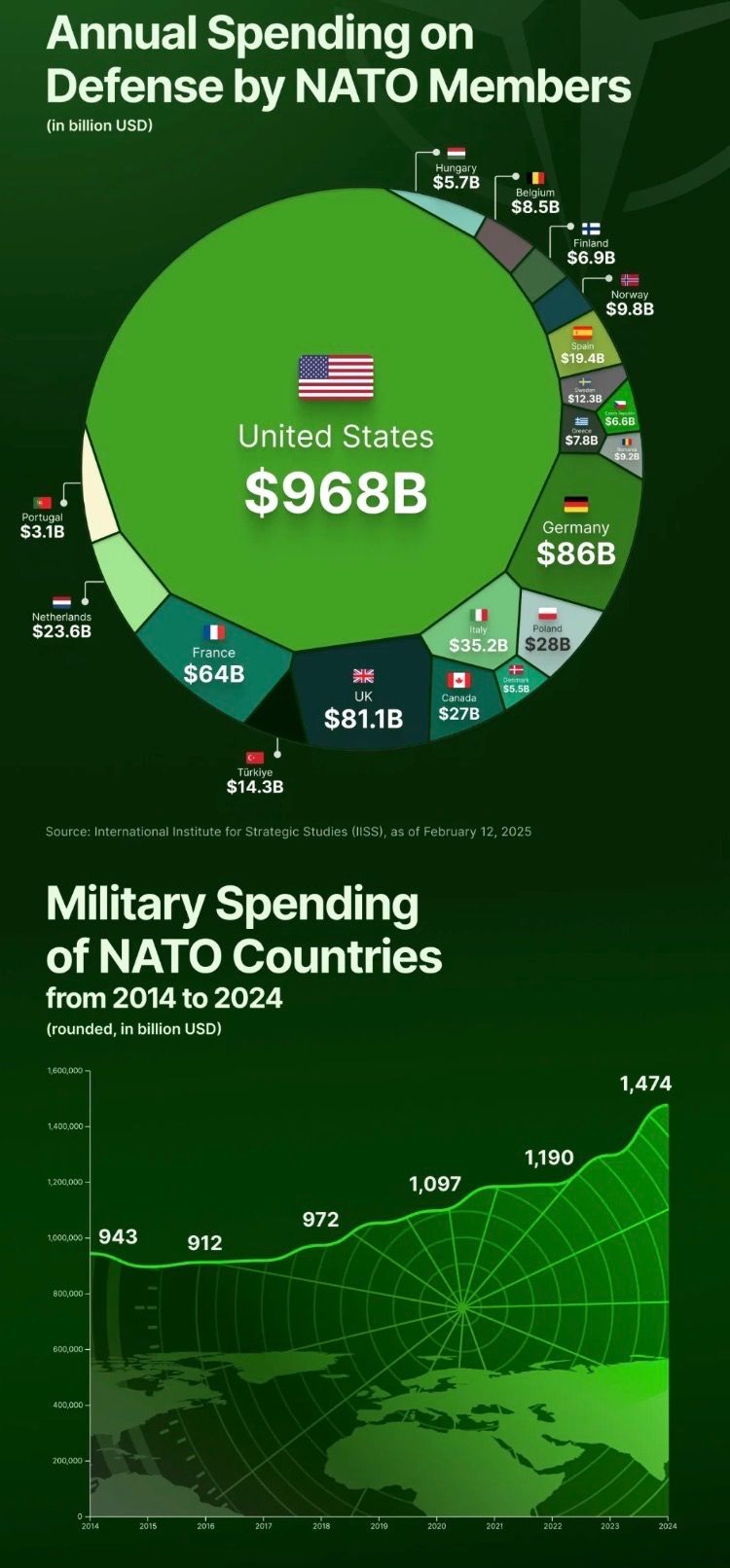
Sources: International Institute for Strategic Studies (IISS) as of 2/12/25. & Statista, Military spending NATO countries from 2014 to 2024, as of 7/9/24.
Why South Korea? Diversification Beyond Domestic Defense
South Korea has emerged as a major exporter of defense equipment - from armored vehicles and artillery systems to advanced aerospace technologies. [4] The country’s strategic position in Northeast Asia, ongoing modernization efforts, and expanding global partnerships all contribute to the momentum behind its defense industry. [4]
For advisors, the key advantage is diversification. Many client portfolios may already have exposure to large-cap U.S. defense names, which tend to move together based on domestic budget cycles. KDEF offers a way to broaden that exposure geographically and across different segments of the global defense supply chain. This may help reduce concentration risk and may introduce return potential driven by different economic variables, procurement cycles, and geopolitical catalysts.
Positioning KDEF in Portfolio Construction
Advisors can think about integrating KDEF within a broader “defense sleeve” or thematic equity allocation. A few practical frameworks include:
Complementary Allocation (5–10%)
Use KDEF alongside U.S. defense ETFs to enhance diversification without materially shifting total portfolio risk.
International Defense Exposure (10–15% of a defense sleeve)
Treat KDEF as the dedicated non-U.S. component within a multi-region defense strategy.
Emerging Defense Allocation
Position KDEF as a targeted exposure to high-growth, innovation-driven defense markets that may outperform traditional names during global rearmament cycles.
These frameworks offer advisors a starting point for aligning KDEF with client objectives, risk profiles, and time horizons.
The Takeaway
KDEF provides more than just sector exposure, it seeks to introduce a strategic layer of diversification and a geopolitical lens at a time when both are increasingly relevant. By articulating how the ETF supports risk management, enhances global positioning, and complements existing defense holdings, advisors can more effectively guide clients through conversations about the evolving role of defense in today’s portfolios.
To learn how KDEF Fits Into 2026’s Important Global Themes click here. >>
[1] Plus500 Staff Writers, Defence Stocks Explained: What Are Defence Stocks?, Plus+500, 7/17/25.
[2] Sacknoff, Scott, Investors are waking up to the defense sector, DefenseNews, 9/2/25.
[3] Han-kook, Jung & Seo-young, Kim, S. Korean defense giants set to surpass 100 trillion won in combines order, The Chosun Daily, 6/5/25.
[4] Pasko, Nika, South Korea is on track to become a defence powerhouse, The Interpreter (Lowy Institute), 10/23/25.
Investors should consider the investment objectives, risks, charges and expenses carefully before investing. For a prospectus or summary prospectus with this and other information about the Fund, please call 1-855-900-0030 or visit our website at www.plusetf.com. Read the prospectus or summary prospectus carefully before investing.
Holdings are subject to change. For current holdings go to www.plusetf.com.
The Fund is distributed by Foreside Fund Services, LLC and Exchange Traded Concepts, LLC serves as the investment advisor of the funds. Foreside Fund Services, LLC is not affiliated with Exchange Traded Concepts, LLC or any of its affiliates.
Risk Disclosures:
Investing involves risk, including possible loss of principal. There is no guarantee the Fund will achieve their stated objectives. In addition to the normal risks associated with investing, international investments may involve the risk of capital loss from unfavorable fluctuation in currency values, differences in generally accepted accounting principles or social, economic or political instability in other nations. Emerging markets involve heightened risks related to the same factors as well as increased volatility and lower trading volume. The Fund’s concentration in an industry or sector can increase the impact of, and potential losses associated with, the risks from investing in those industries/sectors.
The Fund’s concentration in a single country or a limited number of countries will increase the impact of, and potential losses associated with, the risks from investing in those countries.
The Fund is non-diversified. The Fund is new and has a limited operating history for investors to evaluate. A new and smaller fund may not attract sufficient assets to achieve investment and trading efficiencies. In addition to the normal risks associated with investing, investments in smaller companies typically exhibit higher volatility.
The Fund may invest in securities denominated in foreign currencies. Because the Fund's NAV is determined in U.S. dollars, the Fund's NAV could decline if currencies of the underlying securities depreciate against the U.S. dollar or if there are delays or limits on repatriation of such currencies. Currency exchange rates can be very volatile and can change quickly and unpredictably.
The Fund is a recently organized investment company with no operating history. As a result, prospective investors have no track record or history on which to base their investment decision. Moreover, investors will not be able to evaluate the Fund against one or more comparable funds on the basis of relative performance until the Funds has established a track record.
One basis point (bps) is equivalent to 0.01%.


